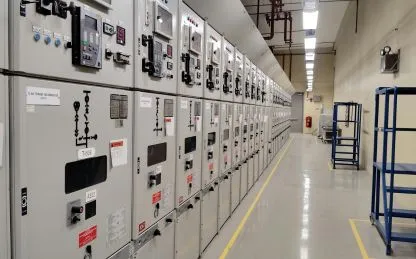
A heating, ventilation, and air conditioning starter panel plays a vital role in the operation and control of heating, ventilation, and air conditioning systems. This device is the central point and monitors the performance of motors, compressors, and fans, hence ensuring the efficient operation of the HVAC systems. An HVAC control panel helps control the operation of the HVAC systems, for instance, temperature, airflow, and the safety functions.
The motor starter control panel, within the HVAC system, operates through the management and monitoring of the electrical loads used in motors. The motor starter control panel consists of protective components such as contactors, overload protectors, and circuit breakers that protect the equipment from any electrical faults. The modern HVAC automation technology incorporates motor starter control panels with sensors or controllers to provide energy efficiency and a standard environment.
The importance of HVAC systems depends on maintaining air quality, temperature, and the well-being of occupants in a particular environment. A good electrical panel in an HVAC system ensures that the system operates steadily without shutting down, thereby reducing maintenance costs. Electrical panels are widely used in office buildings, factories, hospitals, and shopping malls because of their higher efficiency.
Khushi Industries, a trusted manufacturer and supplier in Mumbai, Maharashtra, provides high-quality HVAC starter panels designed to meet diverse application needs.
A heating, ventilation, and air conditioning starter panel is an electrical housing that safely controls and protects the motors that drive essential HVAC components like fans, compressors, and pumps in order to ensure adequate climate control. This acts as a central power and control station for an entire HVAC system.
• A contactor and overload relay are necessary per motor to handle the switching function as well as protect from overcurrent or overheating. The starter should be sized according to the motor nameplate rating
• Install control transformers, fuses, and miniature circuit breakers to ensure safe auxiliary power and protection against short-circuit current
• The control panel for HVAC systems for logic automation and or PLC automation: Sequencing, interlocks, and simple HVAC control
• The status indicators and monitoring devices, like the selector switch and the metre, are located on the HVAC electric panel
• Power supplied to the motor starter panel is conditioned and distributed through contactors and protection to the individual motors
• Sending out a start command energizes the contactor coil, thus completing the power circuit that enables the motor to start running in a controlled manner, in most cases through the application
• Feedback from sensors and safety interlocks allows automatic shutdown or sequencing, supporting efficient HVAC automation
The heating, ventilation, and air conditioning fields require the use of HVAC motor starter panels to ensure the reliable operation of the motor. The following are the categories of motor starter panels needed for the different systems within the HVAC field:
• DOL Starter Panels: Direct On-Line starter, there is instant access to full voltage, leading to rapid start times when using motors. Ideally used in small HVAC motors with a capacity rating no greater than 10 HP when operating basic fans or pumps. It comes with basic overload protection at an affordable price using the HVAC control panel
• Star-Delta Starter Panels: It works on the basis of first connecting in star mode, then changing to the delta configuration to reduce the current surge in the initial mode. It is most suitable for medium to large HVAC motors
• VFD-based Starter Panels: These incorporate Variable Frequency Drive technology that helps to control speed and torque with great accuracy through HVAC automation. There is energy efficiency, smooth acceleration and deceleration, and the devices can be coupled with sensors for controlling air flow through modern HVAC electrical products
• Soft Starter Panels: Ramp up voltage gradually to cut peak currents. Common in heavy-duty compressors and large fans, extending equipment life
Khushi Industries, a dependable manufacturer and supplier in Mumbai, Maharashtra, crafts durable HVAC starter panels for varied needs.
An HVAC starter kit is an essential product that increases system reliability, power savings, and performance. The system is equipped with advanced control functionalities aimed at improving every operation associated with heating, ventilation, and air conditioning. Key benefits include:
• Energy Efficiency: The panel prevents power waste by starting motors at the best point of starting and turning them off at the best time. Controlling current flow is one way of reducing peak load and improving the efficiency of the whole system
• Smooth Motor Operation: The unit functions flawlessly as a motor starter panel, which protects against sudden voltage spikes and mechanical load, thereby facilitating the smooth running of the motors
• Reduced Maintenance Cost: Automated monitoring helps diagnose issues earlier, thus cutting down on repairs and minimizing component damage
• Enhanced System Protection: Safety devices like overload relays, circuit-breakers, and protection devices protect against damage from short circuits and voltage fluctuations
• Advanced HVAC Automation: In modern HVAC automation, remote monitoring and intelligent control can be accomplished through an HVAC control panel by making use of integrated sensors and programmable logic controllers
• Improved Reliability: The HVAC Electrical Panel improves reliability with low downtime, hence ensuring smooth air flow as well as environmental comfort
A heating, ventilation, and air conditioning starter panel plays a vital role in modern networking. The system ensures that motors are operated safely, energy consumption is optimized, and the general performance of the system remains smooth in each and every application. Some of the major applications of this are as follows:
Commercial Buildings:
The HVAC control panel monitors the air handling units and cooling systems to maintain an optimum indoor climate with a view to efficiency in offices, hotels, and retail outlets.
Hospitals and Malls:
Large facilities rely on automated heating, ventilation, and air conditioning systems to control the air purity, humidity, and temperature. Variable motor control panels are supported by starter panels to maintain continuous airflow in areas where patient comfort and public spaces exist.
Industrial HVAC Systems:
Industries and warehouses have motor starter panels to run chillers, compressors, and exhaust systems efficiently. These panels protect motors against excessive voltage surges and loads.
Educational and IT Institutions:
HVAC electrical panels provide the needed stability and continuity to supply consistent power in facilities for data centers, laboratories, classrooms, and wherever temperature consistency is crucial.
Khushi Industries serves as a trusted producer and supplier in Mumbai, Maharashtra, providing reliable and performance-driven HVAC starter solutions with durable panels for multiple uses.
What is an HVAC starter control panel?
The starter panel for heating, ventilation, and air conditioning ensures the regulation of the operation of the motors and the compressors in the systems. This ensures a smooth start, overload protection, and efficient operation.
What are the types of HVAC starter panels?
Different start panels, such as Direct-On-Line (DOL), Star-Delta, and Variable Frequency Drive (VFD), among others, are intended for use in a particular type of loading requirement.
How do HVAC panels save energy?
Through auto control of the motor and the balance of consumption of electricity, an HVAC panel can reduce any unwanted load.
Where are HVAC panels used?
Such systems are installed in commercial buildings, hospitals, factories, shopping malls, and data centers for the purpose of airflow management and climate control.
What is the purpose of regular maintenance tasks?
Maintenance checks can improve efficiency, minimize downtime, and extend equipment life.

At Khushi Industrial Controls, we build solutions that empower industries to operate efficiently and safely. Quality, reliability, and customer trust are at the core of everything we do.
© 2025 Khushi Industrial Controls. All Rights Reserved. Powered By: GreenMedia Technology